Data Centers – What’s Real & What’s Not?
__primary.png?v=1785957456)
The rapid increase in demand for data centers and computing power to underwrite the A.I. (Artificial Intelligence) race has become front page news. On one hand, the ability for AI tools like Chat-GPT, Claude, CoPilot, Grok, or Gemini to enhance our ability to accomplish everyday tasks is amazing. On the other, concerns about economic and workplace stability, wealth concentration, and machine control give pause to many. From a real estate use perspective, there are also two sides to the coin. To the positive, data centers are an enormous economic development opportunity, and they are strategically important for hosting both AI applications and other Internet infrastructures, all of which are important to our national competitiveness. The main opposition to data centers has focused on two issues: the amount of water they use and the electrical capacity needed to run them.
Peeling through the hype presented by both sides, how you are affected by a local data center depends on your water source and your utility that provides your electricity. This differs by state and location. Let’s consider Illinois and Iowa as two case studies.
First, water use. Data centers currently use a lot of water. A high-volume hyperscale data center uses the same amount of water in a year as 10,000 to 50,000 Data Centers – What’s Real & What’s Not? people (1 million to 5 million gallons of water per day). Medium data centers consume 300,000 to 500,000 gallons per day.
The majority of Iowa data centers are clustered around Des Moines and draw water from relatively shallow aquifers which are vulnerable to drought and have caused concerns about the amount of water available for data centers.
The situation around Chicago is also causing headaches. Data centers southwest of Chicago are contributing to the crisis of the dwindling aquifer beneath Joliet. To ensure adequate drinking water supply, six suburbs made an agreement with the city of Chicago to buy millions of gallons of water a day from Lake Michigan. They are currently building a $1.5 billion pipeline to transport the water, expected to be completed by 2030.
However, not all areas in Illinois or Iowa are equally stressed for water. And in Iowa, large water users must apply to the Iowa Department of Natural Resources (DNR) for a permit that protects instream flows, natural lake levels and well interference. Data centers may tap rivers or drill deep wells into shared aquifers, as long as the use complies with their Iowa DNR Water Use Permit. Use is monitored and fines can be assessed.
In Illinois, on the other hand, permits are not required for withdrawing water from a ground or surface water source. Only annual reporting is required of large water users.
Since 2024, Illinois planning agencies have worked with the IDNR, Illinois-Indiana Sea Grant, and the Northwest Water Planning Alliance to develop a water sustainability plan for five counties in northeastern Illinois — the very region under the greatest data center pressure. But it remains a planning exercise rather than a permitting or enforcement regime.
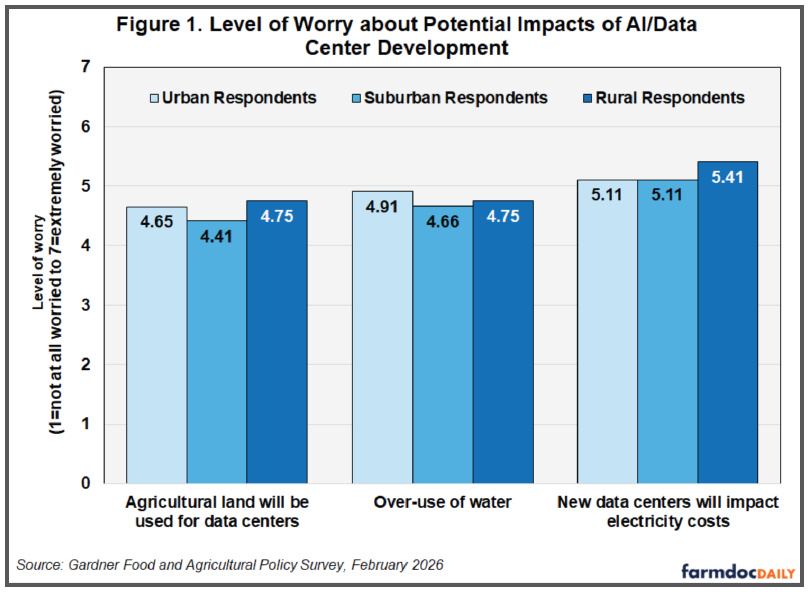
What’s the future? Tech companies are recognizing the water issue pushback. An increasing number of data centers now use cooling systems that dramatically reduce or eliminate freshwater consumption. For example, most of Microsoft’s Mount Pleasant, Wisconsin data center campus will use a new “closed-loop” system design that will consume zero water for cooling.
QTS Data Centers’ plan is to use a system requiring no water, using a refrigerant or a closed-loop system that requires a one-time input of water that is then recycled and reused. The company reports that those methods save more than 48 million gallons of water annually in the operation of each data center.
Google uses reclaimed or non-potable water at over 25% of its data center campuses. Amazon Web Services announced that 20 of its data centers are cooling with purified wastewater instead of potable water – a small number of centers currently, but the number is expected to increase.
The second big issue for data centers is their appetite for electricity and the potential to increase electricity rates for normal power customers.
In northern Illinois, electricity rates increased about 50% over two years for customers served by Commonwealth Edison (ComEd). In Illinois, electric rates are unregulated, so as the demand for ComEd electricity increased and prices from its grid operator soared, these costs were passed directly to consumers.
In Iowa, however, average residential rates (using the month of March) have remained steady around 13.40 cents per kilowatt hour since 2024. And in March 2025, they actually dropped to an average 12.48 cents per kilowatt hour, until rising back up to 13.42 cents in 2026). The main difference between Illinois and Iowa is Iowa’s electric rates are regulated at the state level by the Iowa Utilities Commission.
Also, one of Iowa’s major utilities, MidAmerican Energy, attributes its rate containment to 20 years of investment in wind and solar projects. In 2026, 60% of Iowa’s electricity comes from wind power, 2.5% comes from solar power, with 25% from coal, 12% natural gas and 1% hydropower.
Many states and utilities are exploring ways to ensure that data centers can come online without shifting costs to other ratepayers. The electric grid provider, PJM Interconnection, which manages power for 13 states including ComEd in northern Illinois, has pushed to require large tech facilities to pay for new power sources built on their behalf, ensuring they cannot shift costs onto regular consumers.
Last year, utility AEP Ohio introduced a new rate schedule for data centers, requiring them to pay for at least 85% of the energy they are subscribed for, regardless of how much they actually use. Other states, like Oregon, Minnesota and Missouri, have required utilities to create new billing classes and rate structures for large energy users so that their costs aren’t shared by households and businesses.
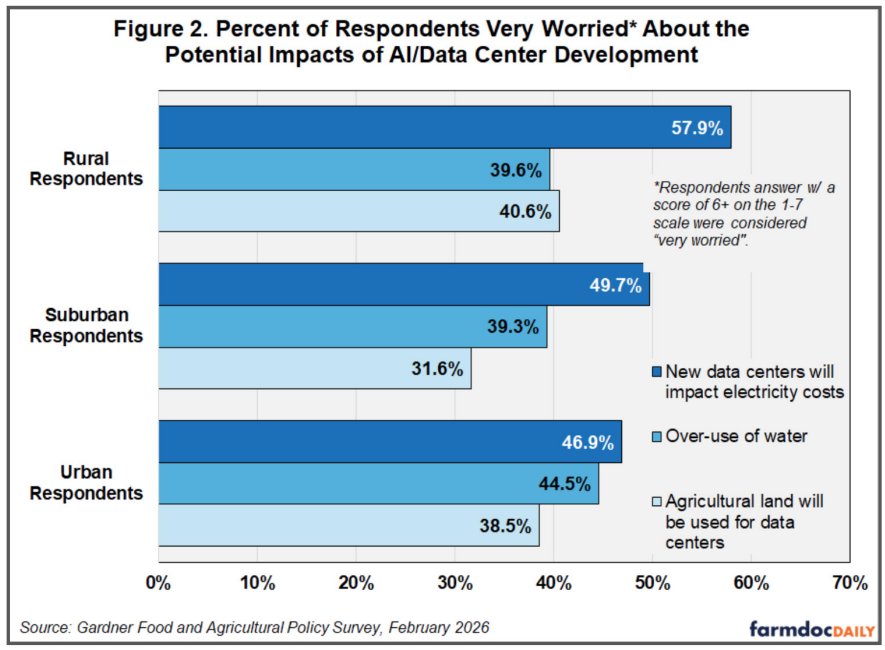
AI tech companies such as Anthropic have publicly committed to funding 100% of the grid upgrades required for their operations, rather than passing those costs onto the public.
Microsoft recently released its Community-First AI Infrastructure initiative, in which it pledges to cover electrical costs, replenish local water sources and pay its full share of local taxes.
On the economic development side, the construction of data centers can generate hundreds of well-paying, though not permanent, jobs for technicians, electricians and other local trade workers. Longer term, a data center complex generally employs 25-150 permanent full-time staff. However, these salaries can range from $74,000 for a data center technician to more than $160,000 for an operations manager.
Data centers can also generate local and state tax revenue which boost the local economy. According to a recent Wall Street Journal article, in a school district in Louisiana, some of its teachers will receive bonuses of more than $50,000 this year, thanks to increased tax revenue linked to a Meta Platforms datacenter construction project.
But how big of tax boost depends on the tax incentive package offered to the technology companies. In Iowa, some data center projects qualify for state sales and use tax exemptions. Local property tax exemptions, if offered by a community, Data Centers – What’s Real & What’s Not? generally have an expiration date.
In Illinois, effective July 1, 2026, Governor J.B. Pritzker directed the Illinois Department of Commerce and Economic Opportunity to pause processing all new state tax incentive agreements for data centers.
Some local jurisdictions have also added their own requirements for locating data centers. Linn County, Iowa – home to Cedar Rapids – recently revised its zoning ordinance to require water studies for proposed data center sites. Even more comprehensive, the city of Lancaster, PA, adopted a community benefits agreement which directs the developer to use clean energy to power the facility; mitigate noise; support local employment programs; and deliver $10 million each for economic development and advancing Lancaster climate and community goals.
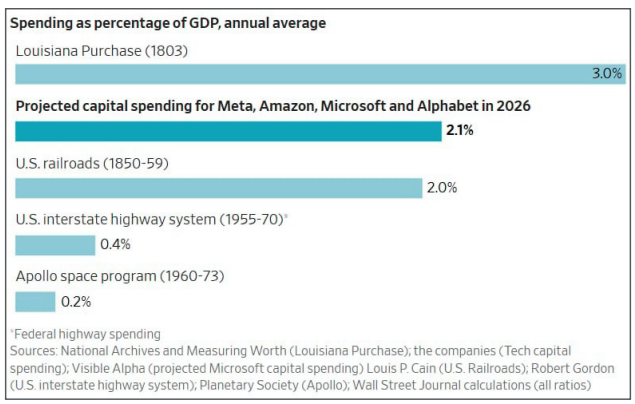
There is much at stake as our nation (and the world) continues to develop technology and tools for the benefit of our citizens, businesses, and economy. Like all technological advancements, there are sure to be a great many ongoing discussions and competing tensions that must be managed, in the thoughtful development of this evolving space. Water, electricity, and land use are central to this topic.
Stay Connected and Informed
Agriculture and market conditions are constantly shifting. Subscribe to receive our monthly market updates and expert insights, so you’re equipped to make confident, well-timed decisions. If you have questions about your land, our farmland experts are ready to help.
Related Articles